
The best plates are designed around your recovered-paper furnish, refiner configuration, and refining target—balancing fiber development, freeness, energy, throughput, and wear life.
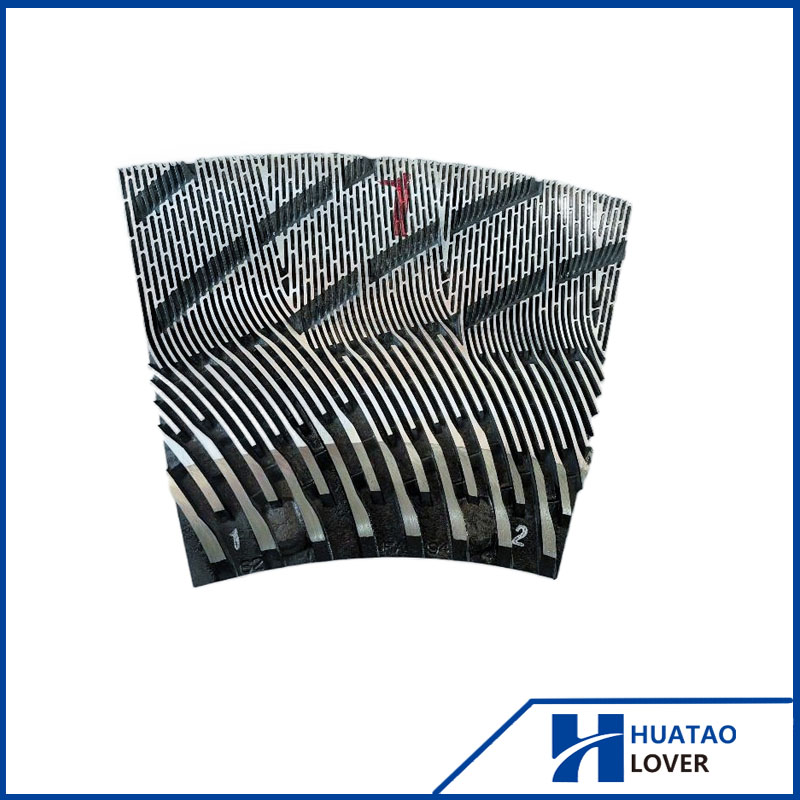
Why Furnish Comes First
OCC, mixed paper, and deinked pulp differ in fiber length, fines, fillers, and contaminants. Document your blend and process position before comparing designs.
Plate Geometry
Bar width, groove width, angle, dams, and open area all matter. A more aggressive pattern is not automatically better—match it to your refining objective. Refer to REFINER PLATES FOR PAPER MAKING for pattern options.
Material Selection
Hardness is only one indicator. Alloy, heat treatment, casting quality, and toughness affect wear and performance.
How to Evaluate a Trial
Record production rate, motor load, specific energy, freeness, and strength. Inspect plates after a defined period. Define acceptance criteria before testing.
Inspection & Replacement
Check for rounded bars, uneven wear, cracks, and blocked grooves. Replace based on condition and process performance, not universal hours.
Buyer Checklist
Refiner model, plate diameter, segment ID
Furnish type, blend, consistency, throughput
Current pattern drawing/photos
Motor load, specific energy, freeness data
Material info, operating hours, replacement reason
FAQ
Q: Are harder plates always better?
A: No. Pattern suitability, toughness, and wear mechanism also matter.
Q: Is there a universal OCC pattern?
A: No. Design depends on refiner, furnish, and targets.
Q: How to compare suppliers?
A: Compare geometry, material docs, inspection, trial results, and support.
Related Products: REFINER SEGMENTS | HIGH CONSISTENCY REFINER PLATES
Contact: Lucy Chai | Lucy.chai@huataogroup.com | WhatsApp: +86 15373883537
can not be empty
can not be empty

HUATAO GROUP - REFINER PLATES
ADD : No.298 Zhonghua North Street, Shijiazhuang 050000 China.
TEL : +86 0311 80690567
EMAIL :Lucy.chai@huataogroup.com
Web: www.refinerdisc.com
 WhatsApp & WeChat : +86 15373883537